







Category: Philosophy of Science
-
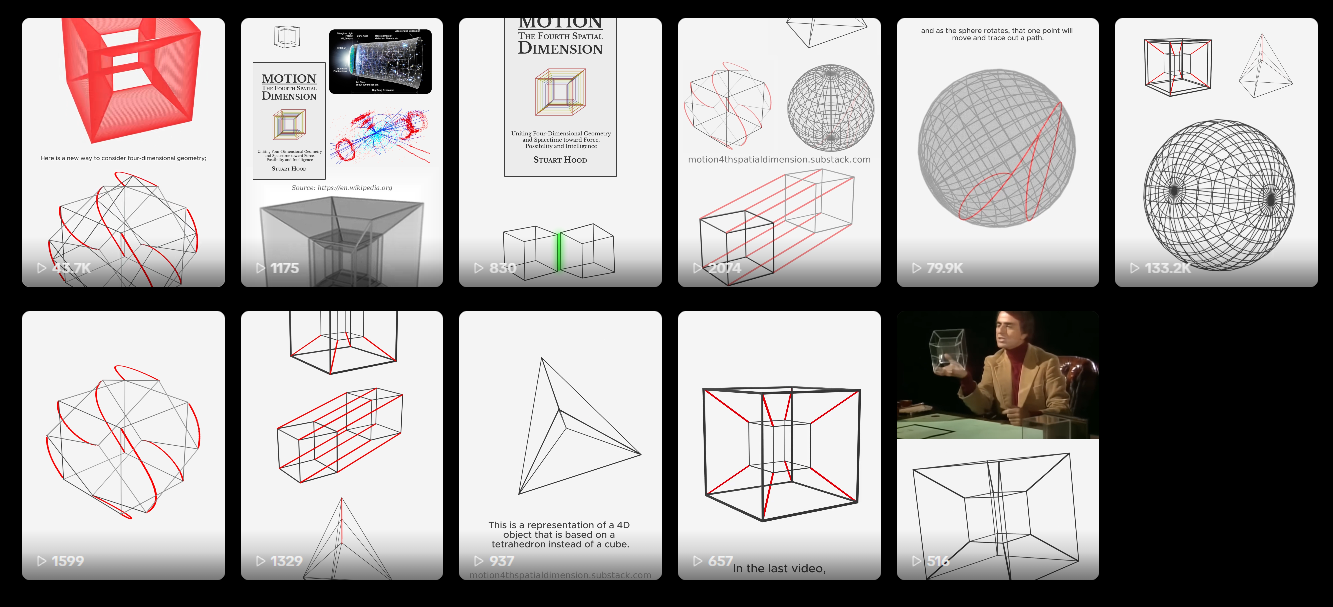
Video Series Up
I’ve been working hard to learn 3D animation in Blender as well as video editing in CapCut to explain my book’s ideas. Videos are now up on TikTok, Youtube and Instagram. Youtube: @Motion4thDimensionTikTok: @motion4thdimensionInstagram: @stsmhood
-
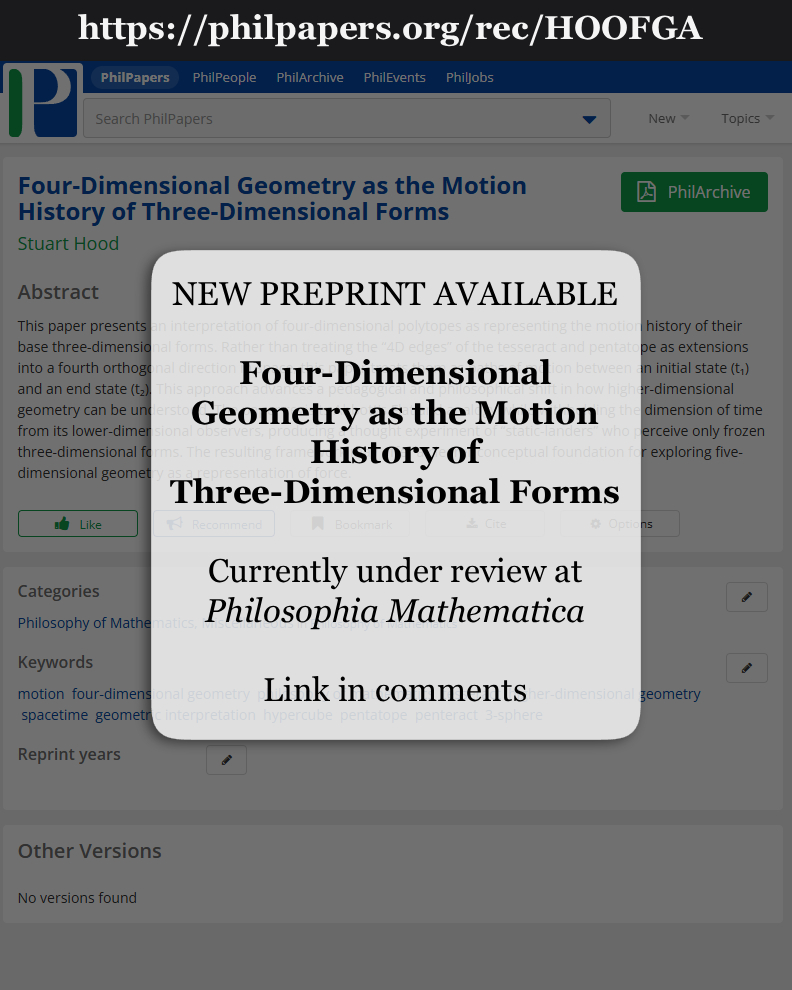
New Preprint Up on PhilPapers.org
https://philpapers.org/rec/HOOFGA Four-Dimensional Geometry as the Motion History of Three-Dimensional Forms AbstractThis paper presents an interpretation of four-dimensional polytopes as representing the motion history of their base three-dimensional forms. Rather than treating the “4D edges” of the tesseract and pentatope as extensions into a fourth orthogonal direction in space, this paper treats them as paths of…
-
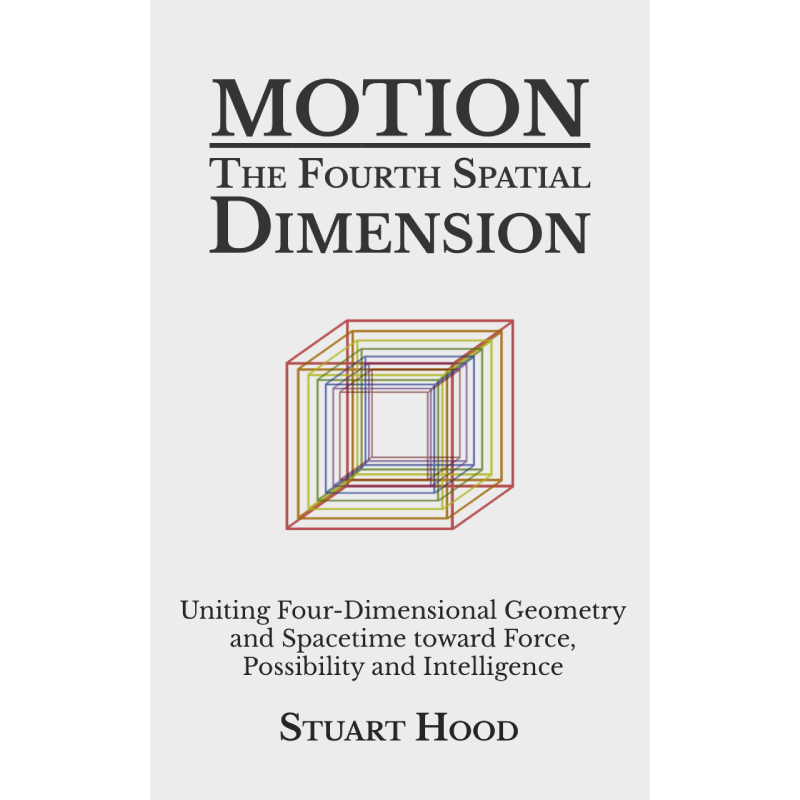
Motion: The Fourth Spatial Dimension
What if the fourth dimension isn’t simply just time, or some unreachable spatial axis that many academics continue to teach about today? What if it is something that has been in plain sight this whole time — something we experience in every moment? In Motion: The Fourth Spatial Dimension, Stuart Hood presents a bold and…
-
Motion: The Fourth Spatial Dimension – An In-Depth Overview
I have been working on a second edition of my book on motion as the fourth spatial dimension, and have since been refining its summary. Below is an in-depth overview of its main ideas: Motion: The Fourth Spatial Dimension is a book that addresses and resolves an over century-old problem about the fourth spatial dimension,…
-
Motion – The Fourth Spatial Dimension: Part II
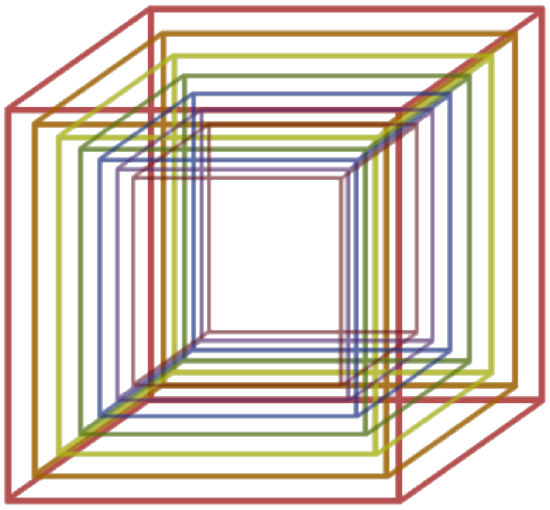
The common representation of a four-dimensional object is the tesseract. Continuing with the symmetrical representation of dimension from the point to the line to the square to the cube, I propose that a tesseract is a symmetrical representation of a cube’s fourth spatial dimension’s path of motion as each part of it is changed in…
-
Time – A Measure of Duration
People have recently started to ask, “does time exist?” My response is “yes, of course,” as a method of measuring any moment. Duration is the history of the constantly existing moment known as the present. We cannot escape the present. We can remember the past and conceptualize the future, but we always live in what…
-
Laws of Motion
Newton’s laws of motion all describe its interaction with force. Here are some principles that strictly deal only with motion (movement/change) in relation to space and time. Motion is change in spatial occupancy. Objects move by change in position, rotation or formation. Motion occurs toward or anywhere in between six directions in relation to an…
-
Motion – The Fourth Spatial Dimension
What are the properties of motion? It is movement in space. An object can change its position in relation to another object by a change in distance or rotation on its axis. An object can move in relation to itself through the transformation of its shape by distortion. Motion is a property of physical reality…
-
A Response to the Poincare Conjecture
A Response to the Poincare Conjecture as Described in “Mathematics: A Very Short Introduction” by Timothy Gowers “Is there some easy way of telling, by looking at a three-dimensional atlas, whether the manifold it represents is the three-dimensional surface of a four-dimensional sphere?” The fourth spatial dimension is movement. A static three-dimensional model of the…